Suez Canal Traffic Climbs as Major Carriers Return to the Red Sea
Suez transits hit their highest monthly level since December 2023 as major container lines resume the route, but security threats in the southern Red Sea keep the recovery cautious.
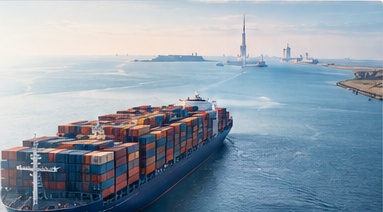
Container lines are steadily bringing services back to the Suez Canal after almost two years of diverting around the Cape of Good Hope. According to Lloyd's List Intelligence, Suez transits reached 1,232 in August, a 28% increase year on year and the canal's busiest month since December 2023. Ultra-large container ships, which had almost disappeared from the route, are also beginning to return.
In mid-September, Maersk and Hapag-Lloyd announced that further services in their Gemini Cooperation network would switch back to the trans-Suez route, adding to loops that had already resumed. Other major carriers have also returned selected services.
The recovery remains cautious. Renewed security threats in the southern Red Sea have slowed traffic growth through the Bab el-Mandeb, and official security advisories remain in place. Carriers describe the return as gradual and dependent on regional stability.

LIMA Expert Insight
A return to the Red Sea means crews and shore teams must re-adapt to high-risk transit procedures, security planning and changing port rotations. Refreshed training in ship security, risk assessment and bridge team management should be part of any company's return plan.
Sources and references
Lloyd's List Intelligence — Lloyd's List Intelligence, Red Sea Brief (18 September 2026)
Related stories
 Decarbonisation & Alternative Fuels
All Eyes on the IMO as Net-Zero Framework Talks Return
Source: DNV · 30 Sept 2026
The IMO's Net-Zero Framework, combining a fuel greenhouse-gas intensity standard with a pricing and reward mechanism, is expected back at the negotiating table this October.
Maritime Technology & AIIMO Adopts First Global Code for Autonomous Ships
Source: DNV · 30 Sept 2026
The IMO's new MASS Code sets a goal-based framework for autonomous and remotely operated ships, taking effect on a voluntary basis with a mandatory code targeted for 2032.